
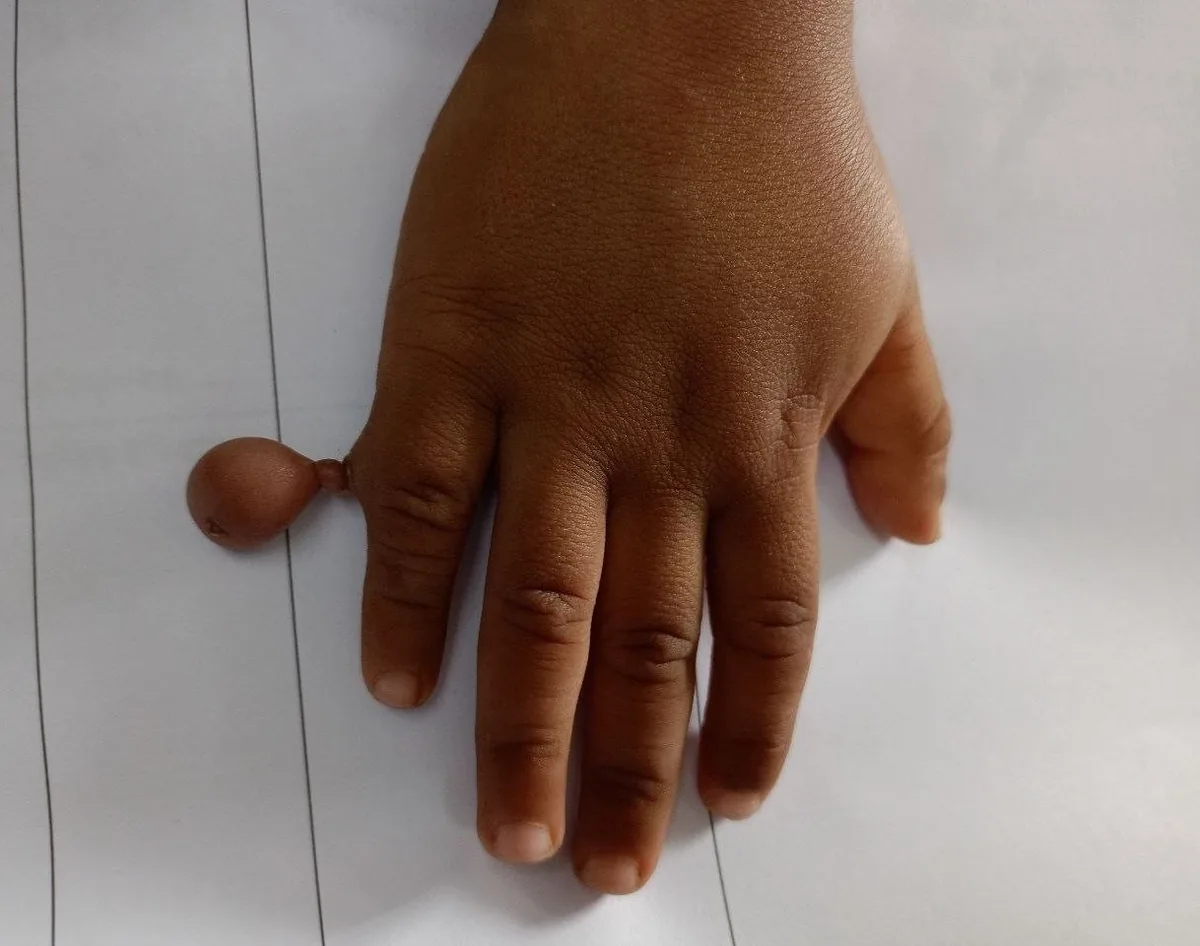
What is polydactyly?
Polydactyly means an extra finger or toe from birth. It is often on the little-finger side of the hand. Some extra fingers are only a small soft piece of skin on a thin stalk; others contain bone and joints.
What parents notice
- A small extra digit beside the little finger or thumb.
- A thin stalk joining it to the hand.
- It may change colour, turn dark or hurt if the stalk twists.
See a doctor soon if
- The extra finger turns blue, dark or swollen.
- A thread or cloth is tied around it.
Treatment
An extra finger on a thin stalk can twist and cut off its own blood supply, and can catch on clothes. It is better removed early by a surgeon, often as a small day-care procedure. If it contains bone, an X-ray is done first and a planned operation is needed so the hand works and looks normal. Do not tie it with thread at home.
Common questions
Is it a sign of another problem?
Usually it occurs alone, but the surgeon checks the child for other differences.
Does it come back?
Not when it is removed fully; the surgeon explains the exact plan for your child.
This page is for general information for parents. Every child is different: after examination and tests, an experienced paediatric surgeon decides the condition and the method of treatment. So for any problem, please consult a registered paediatric surgeon.