
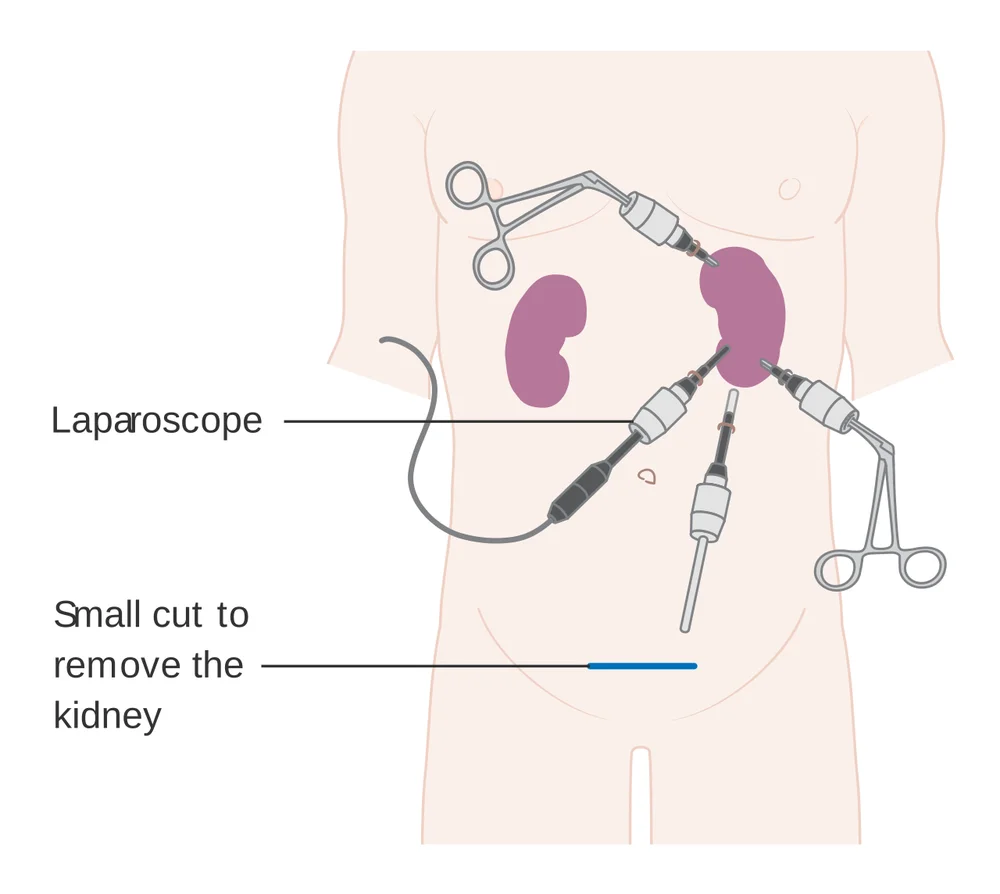
What is laparoscopic (keyhole) surgery?
Instead of one large cut, the surgeon makes a few small openings, passes a thin camera and fine instruments through them, and operates while watching a screen. The belly is gently filled with gas to make room.
Where it can help
- Removal of the appendix
- Finding and treating a testis that cannot be felt
- Some hernia repairs
- Kidney-drainage repair (pyeloplasty)
- Ovarian problems such as twisting
- Some cysts and other abdominal conditions
- Assisting repair of an absent anal opening in selected cases
What to expect
Compared with a large cut, keyhole surgery usually leaves smaller scars and often means less pain and an earlier return to normal activity. It is not right for every child or every condition. Some operations are better open, and the surgeon may switch to an open operation during the procedure if it is safer.
Training
Dr. Shaoun trained in Basic Laparoscopic Surgery and uses laparoscopy for suitable children. Choosing the approach is a decision made for each child after examination.
Common questions
Is keyhole surgery always better?
No. It is one option. The best operation is the one that is safest and most effective for your child's condition.
Will my child need to stay in hospital?
Some keyhole operations are done as day-care; others need a short stay. The surgeon will tell you.
This page is for general information for parents. Every child is different: after examination and tests, an experienced paediatric surgeon decides the condition and the method of treatment. So for any problem, please consult a registered paediatric surgeon.