
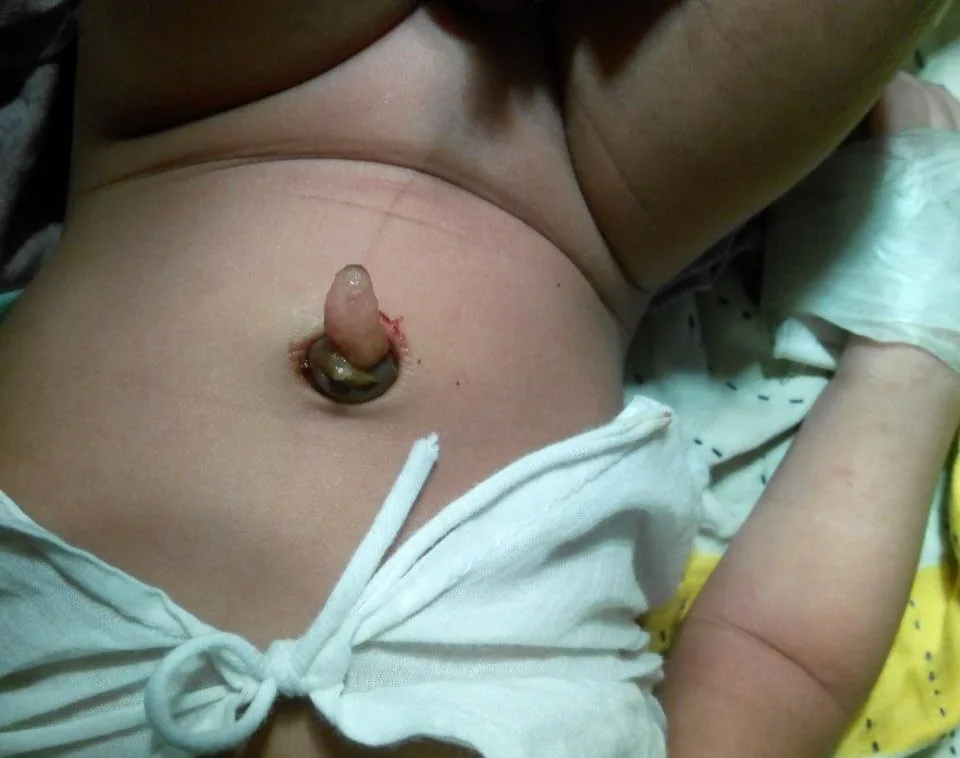
Navel that will not dry
After the cord falls off, a small moist pink lump (an umbilical granuloma) can stay and keep oozing. It is harmless and treated in the clinic with a simple procedure. If the navel stays wet for weeks, or leaks clear fluid or urine, there may be a small channel left from before birth (from the bladder or bowel) which needs an ultrasound and sometimes a small operation.
See a doctor the same day if
- The skin around the navel is red and spreading, warm, or has pus.
- A newborn has fever, is not feeding well or is very sleepy.
- There is bad smell, or the belly looks swollen.
Swollen navel (umbilical hernia)
A soft bulge at the navel, bigger when the baby cries, is common. Most small umbilical hernias close by themselves by about four to five years of age. Surgery is considered if the hernia is large, is still there after that age, or has caused trouble, such as pain or the bowel getting stuck.
Home care
Keep the navel clean and dry. Do not apply powders, oils, ash or other home preparations. Do not press a coin or strap over an umbilical hernia; it does not help.
Common questions
When should an umbilical hernia be operated on?
Most can wait until around four to five years. The surgeon advises earlier if it is large or troublesome.
Is fluid from the navel always an infection?
No, but it always needs a check. Some cases come from a small channel that a scan can show.
This page is for general information for parents. Every child is different: after examination and tests, an experienced paediatric surgeon decides the condition and the method of treatment. So for any problem, please consult a registered paediatric surgeon.