
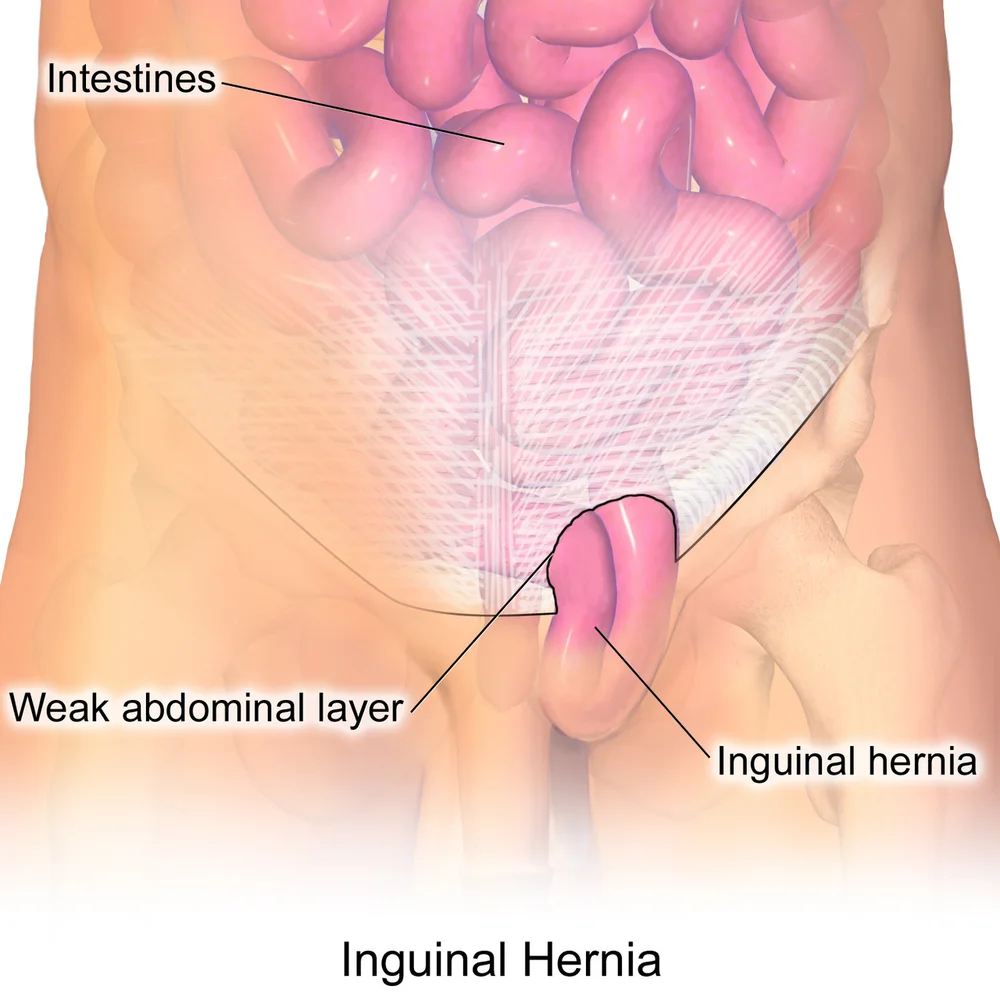
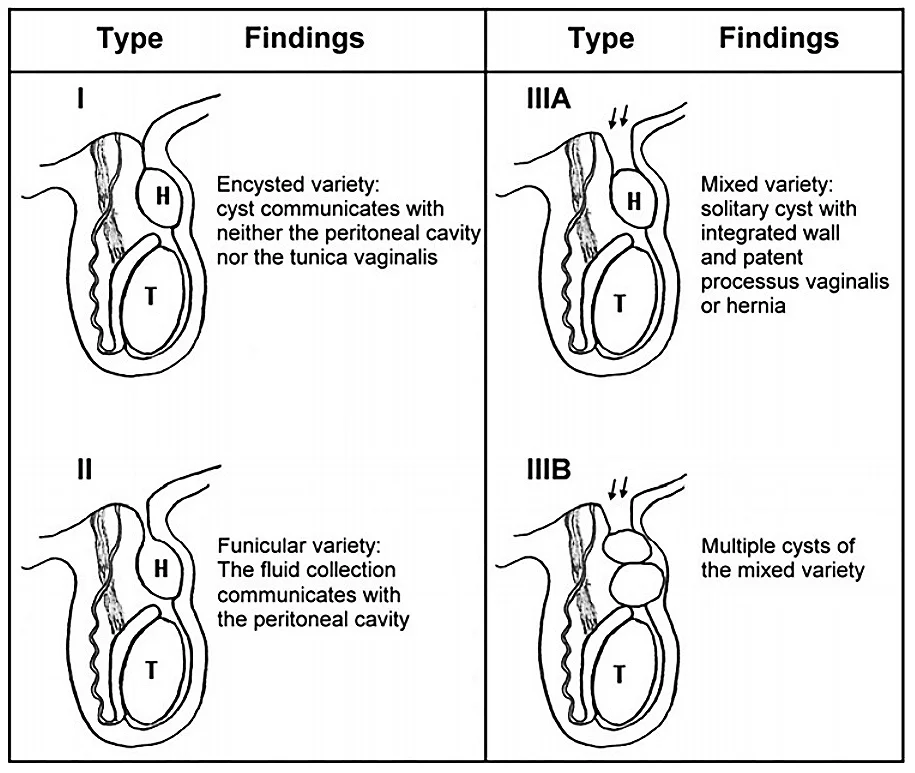
What are hernia and hydrocele?
Before birth, a small channel connects the belly to the groin (and to the scrotum in boys). It normally closes. If it stays open, bowel can slip into it (an inguinal hernia) or fluid can collect around the testis (a hydrocele). Girls can have a hernia too, seen as a lump in the groin.
What parents notice
- A soft bulge in the groin or scrotum, most visible when the child cries, coughs or strains.
- The bulge often disappears when the child is calm or lying down.
- A scrotum that looks larger, often more so by evening, without pain (hydrocele).
- In girls, a small lump in the groin or the fold of the vulva.
Go to a hospital the same day if
- The bulge is there and will not go back, and the child is crying, vomiting or refusing feeds.
- The area is hard, red, dark or very tender.
Treatment
A hernia in a child does not close on its own. It needs a small operation (herniotomy), usually as a day-care procedure under anaesthesia. Timing depends on the child's age and how often the bulge appears; small babies are often done sooner because the risk of the bowel getting stuck is higher. A hydrocele in a baby often settles by itself in the first year or two; one that persists, keeps enlarging or connects to the belly is operated on. In selected children the repair can be done laparoscopically.
Common questions
Will a hernia go away by itself?
No. It needs an operation. What decides the timing is your child's age and how the hernia behaves, which the surgeon assesses on examination.
Is the operation safe for a baby?
It is a well-established operation. Anaesthesia and surgery for infants are done by teams trained for small children. Ask the surgeon about your child's specific risks.
This page is for general information for parents. Every child is different: after examination and tests, an experienced paediatric surgeon decides the condition and the method of treatment. So for any problem, please consult a registered paediatric surgeon.