
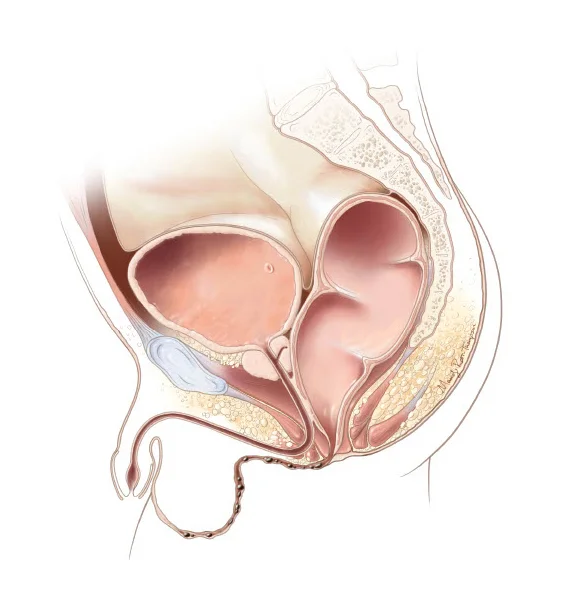
What is anorectal malformation (born without an anus)?
In this birth defect the anal opening is missing, very narrow or in the wrong place. In girls, the bowel may open into the vagina or just outside it. Other organs (the urinary tract, spine, heart, gullet) are checked, because some babies have more than one difference.
What to look for at birth
- No anal opening where it should be, or a very small one.
- No stool (meconium) passed in the first day or two, and a swelling belly.
- Stool coming from the wrong place, for example the vagina or the base of the penis.
- Vomiting.
What to do
- Do not feed the baby if no opening is seen. Wrap warmly and go to a hospital with a paediatric surgeon immediately.
- Every newborn should be checked for an anal opening at birth.
Treatment
It depends on the type. Some babies need a temporary colostomy first, to let stool out safely; the main repair follows some weeks later, and the colostomy is closed after healing. Some low forms can be repaired in one step. The repair may be open or laparoscopic-assisted. After surgery, anal dilatation is taught to parents, and long-term follow-up helps with toilet training. Some children need extra help with bowel control as they grow; this is planned early.
Common questions
Can my child live a normal life?
Most children do well. Some need bowel training and follow-up. Your surgeon will speak honestly about your child's type.
Are girls with an opening in the vagina different?
The plan differs: the surgeon examines and decides the right operation. The same care applies.
This page is for general information for parents. Every child is different: after examination and tests, an experienced paediatric surgeon decides the condition and the method of treatment. So for any problem, please consult a registered paediatric surgeon.